Most roof leaks come from one weak point, not a worn-out roof: a cracked tile, a split in the flat roof covering, or flashing that's lifted at a chimney or wall. We look at the roof, find the actual source (not just where the water came through the ceiling, which is often some distance away), and repair that point rather than quoting for more than the job needs. This page covers what causes leaks, what a repair involves, and what affects the price. For the cost of a full roof replacement, see our roofing cost guide.
What's the most common cause of a roof leak?
Most leaks start at a joint, not an open area: where flashing meets a chimney or wall, around a roof window, at a damaged tile or slipped ridge, or at a split or blister in a flat roof covering. Water then tracks along a rafter or batten before it shows on the ceiling, often well away from the actual leak.
Flat roofs leak most often at the edges, upstands and outlets, where felt or membrane has aged, lifted or been punctured. Pitched roofs usually leak at a flashing, a cracked or missing tile, or round a chimney. Blocked gutters or a missing outlet filter can make a small leak look much worse than it is, since water that should drain away backs up and finds a way in instead, so it's worth checking these before assuming the worst.
Where is flashing needed on a roof?
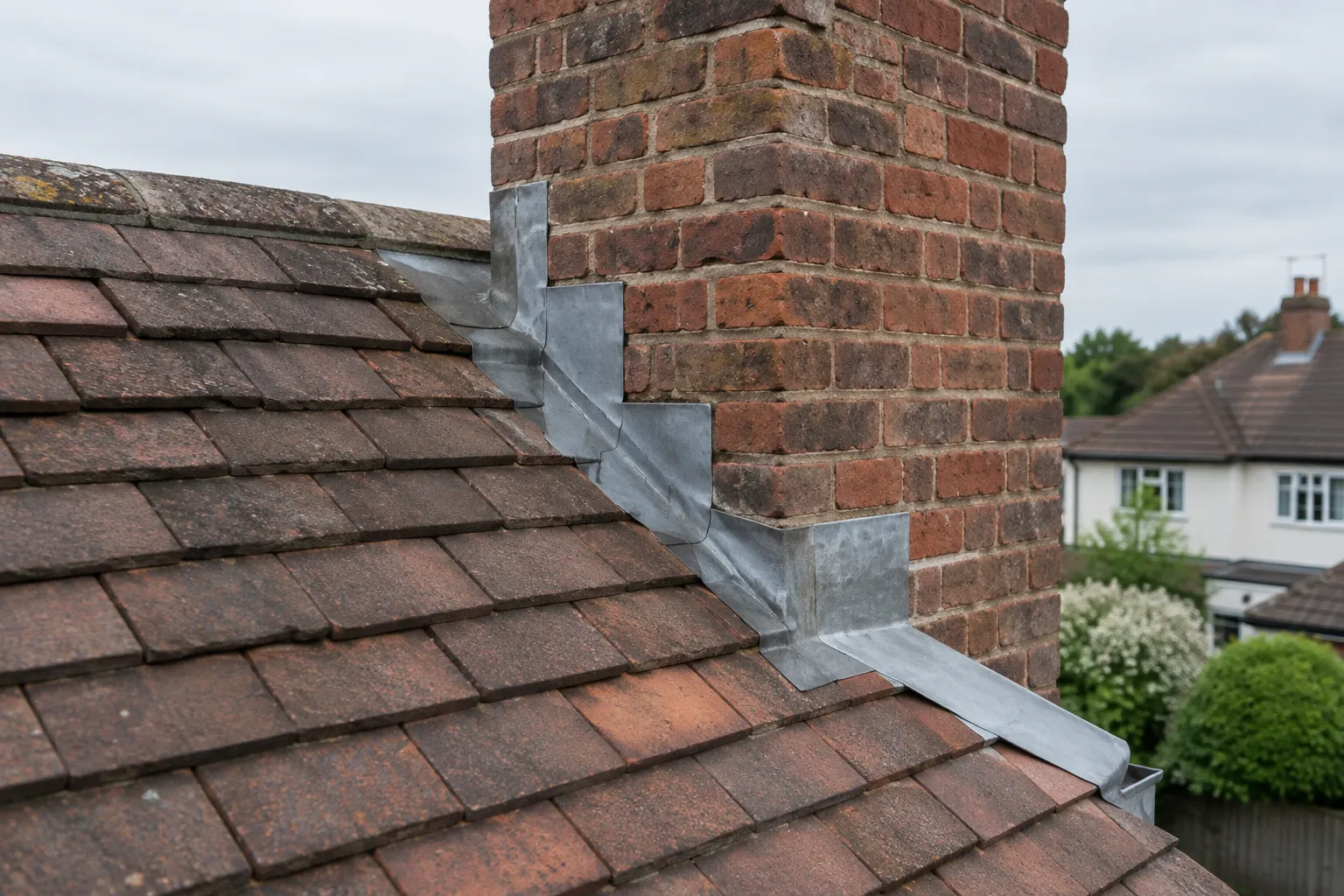
Flashing is the strip of lead, lead-free alternative or specialist tape that seals the joint where a roof meets something that isn't roof: a chimney, a wall, a dormer, a roof window or a valley between two slopes. It's needed anywhere water would otherwise run into a gap, so it's one of the first places we check on a leaking roof.
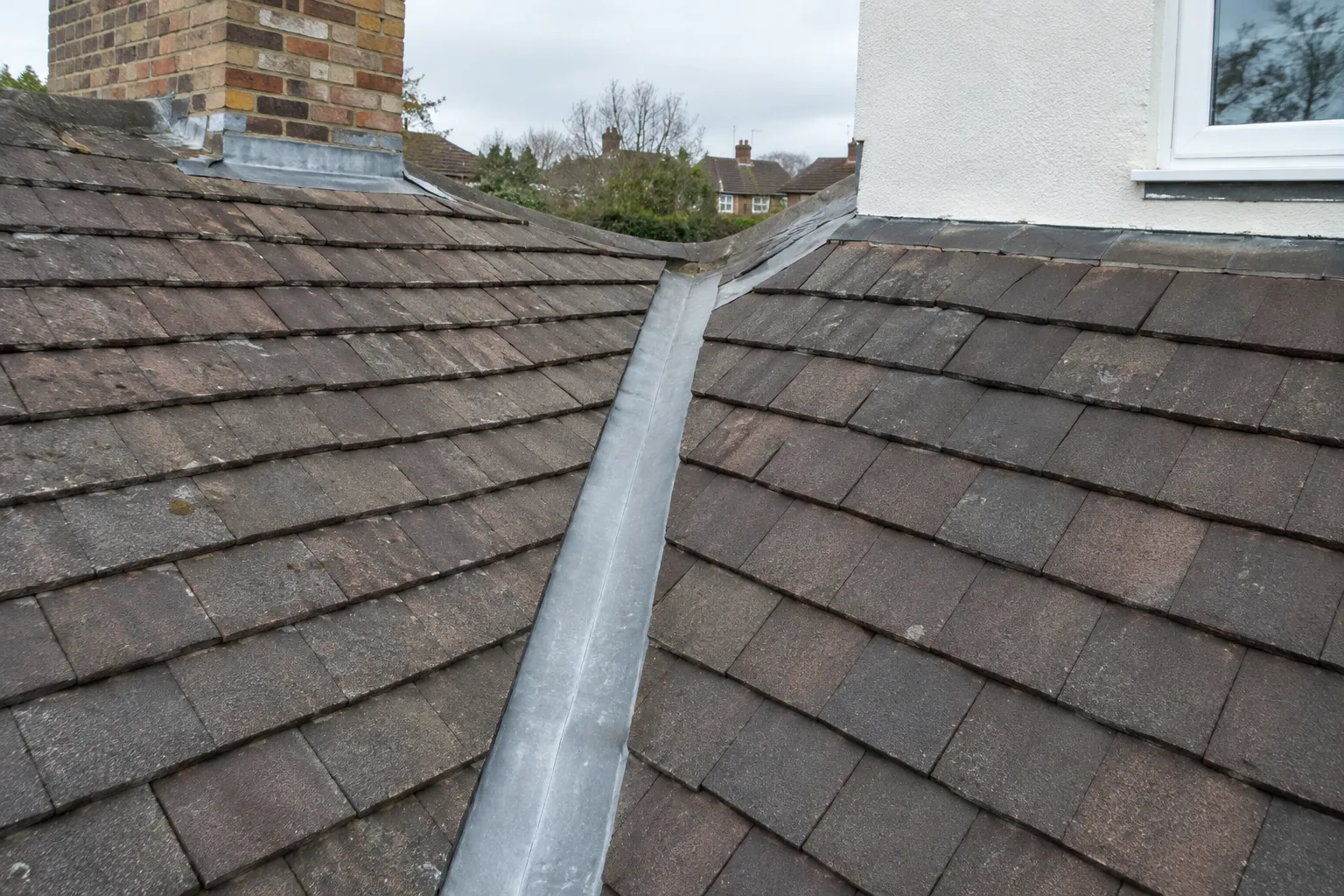
Flashing fails by lifting, cracking or coming away from its fixing, usually after years of UK weather and temperature changes rather than all at once. A loose or missing length of flashing is one of the easiest leaks to repair properly, because it's a localised fix rather than a job that touches the wider roof covering.
Can a leaking roof just be repaired, or does it need replacing?
Most leaks can be repaired without replacing the whole roof. A single cracked tile, a short length of lifted flashing or a small split in a flat roof covering is normally a localised, same-visit repair. Replacement becomes the better option when the roof covering itself has reached the end of its life and leaks keep appearing in new places.
We'll tell you honestly which situation you're in after we've seen the roof, not before. As a rough guide: if you're having the same patch repaired more than once in a couple of years, or the covering is visibly worn across a wide area rather than at one point, a partial or full re-cover is usually the better value option over patching repeatedly. Larger repairs, or anywhere the roof can't be reached safely from a ladder, need scaffolding or tower access, which adds to the cost but is non-negotiable for safe working at height.
What's the best way to seal a leaking roof?
The right fix depends on what's actually wrong, not on which sealant is sold as the strongest. A localised split or small blister in a flat roof covering is usually resolved with a patch of matching material (felt, EPDM or GRP) properly bonded in, not just painted over.
Tube sealants, roofing tape and spray coatings sold for DIY use can buy time on a small, accessible leak, but they're a short-term fix, not a repair: they tend to fail again once the material underneath keeps moving or ages further.
A proper repair uses a method suitable for the specific roof covering and the cause of the leak, not a one-size-fits-all product. We'll tell you which method suits your roof and why, rather than defaulting to whatever's quickest.
Questions people ask
What happens if a roof leak is left untreated?
Water finds the lowest point, so an untreated leak usually spreads before it's obvious: soaked insulation, stained ceilings, damp timber and, over time, rot in rafters or battens. What starts as a small, cheap repair can turn into a much bigger job if it's left over a winter. If you've spotted a leak, it's worth getting it looked at before the next heavy rain rather than waiting.
Is it normal for a roof to leak in heavy rain but not light rain?
Yes, this is common and usually points to a specific, findable cause rather than general wear. Heavy or wind-driven rain can force water past a flashing or lapped joint that copes fine with light, straight-down rain, or it can overwhelm a gutter or outlet that's partly blocked. It's a useful clue when describing the problem to us, since it helps narrow down where to look first.
Does a roofer have to give me paperwork on the repair?
No guarantee is required by law on repair work, so not every job comes with one as standard. What you should always get is a written quote before work starts, and it's reasonable to ask what happens if the same leak comes back. Ask any roofer directly what's covered and for how long before you agree to the job.
How much does it cost to fix a leaking roof?
It depends on the cause and how it's reached. A straightforward, accessible repair, such as refixing flashing or patching a flat roof, typically runs from a little over a hundred pounds to a few hundred; a repair needing scaffolding or affecting a wider area costs more. See our roofing cost guide for fuller ranges, or send us the details for an exact quote.
Can I fix a leaking roof myself?
A small, ground-reachable job, like clearing a blocked gutter that's causing water to back up, is reasonable to do yourself if you're comfortable with the access. Anything that means getting onto a roof or working at height is a different matter: falls from roofs and ladders are a leading cause of serious injury in home maintenance, so weigh that risk against the cost of a repair before deciding.
Where these facts come from
- Published UK roofing repair price guides (Checkatrade, MyJobQuote, MyBuilder), checked October 2026
- Building regulations approval, GOV.UK
Last updated