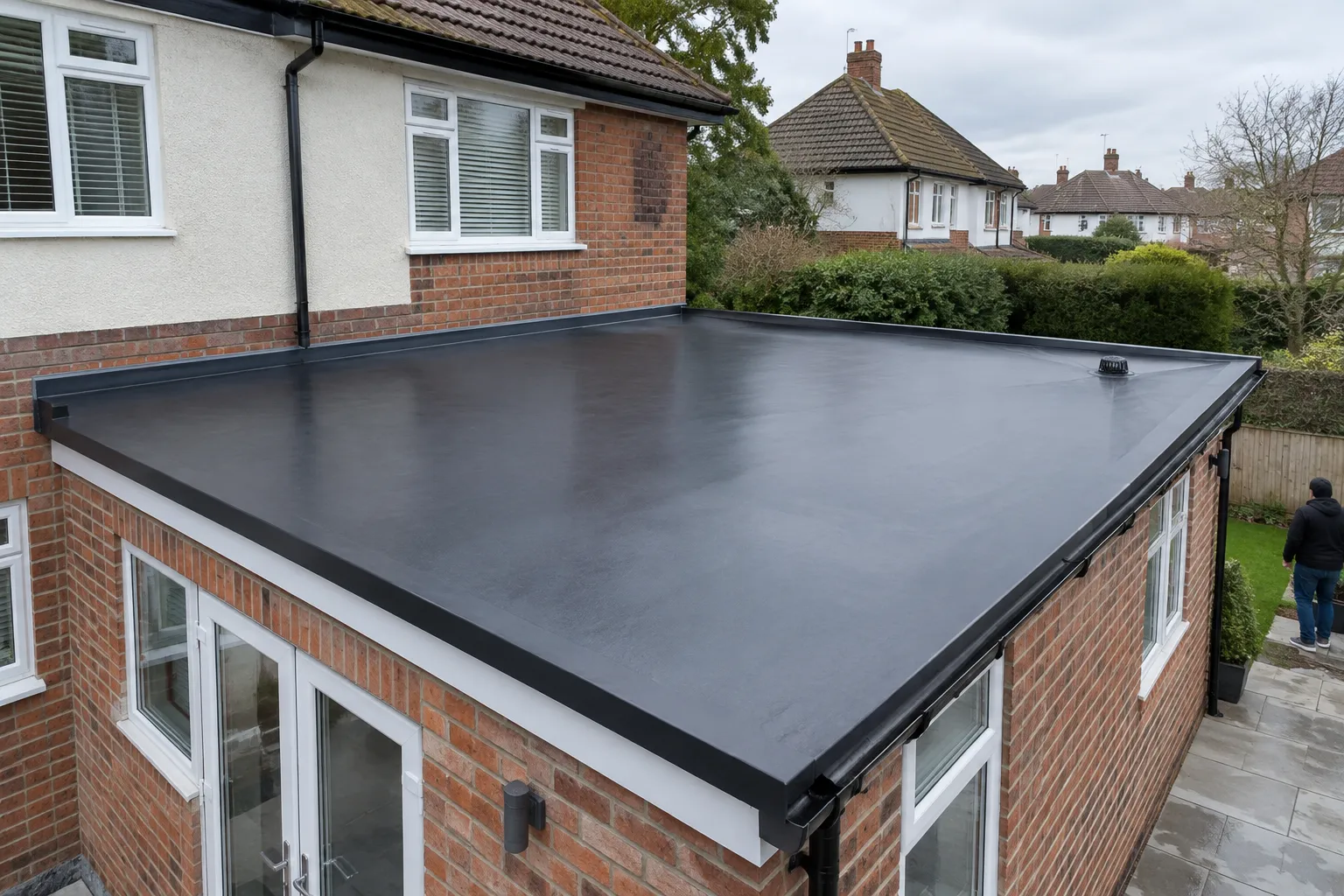
A flat roof is never actually flat: it has a slight fall built in so water runs off to an outlet or gutter, and most leaks trace back to that fall, a seam, or an edge detail rather than the covering itself failing all over. We repair and replace flat roofs in felt, EPDM rubber and GRP fibreglass, and we'll tell you honestly which is right for your roof rather than defaulting to whichever we'd rather fit. If you're not sure what's on your roof now, send us a photo and we'll tell you before you book anything in.
What are the downsides of EPDM roofing?
EPDM (a single-sheet rubber membrane) is durable and low-maintenance, but it has real trade-offs. It's usually only available in black, which absorbs heat and can make the roof space warmer underneath. It can shrink slightly over years, which pulls at the edges and penetrations if it wasn't detailed correctly at installation.
Sharp debris or foot traffic can puncture it, since it has less resistance to impact than some materials, and seams between sheets, where used, are a weak point if they're not bonded properly.
None of this makes EPDM a poor choice, it's one of the most common flat roof coverings in the UK for good reason, but it does mean the installation matters more than the material. If you're weighing it up against felt or GRP, call us for support and advice before you decide, there's no charge for a phone conversation.
How do you fix a flat roof?
The right fix depends on what's actually wrong. A small blister, split or puncture is usually cut back and patched with matching material, properly bonded rather than just sealed over the top, without needing to touch the rest of the covering.
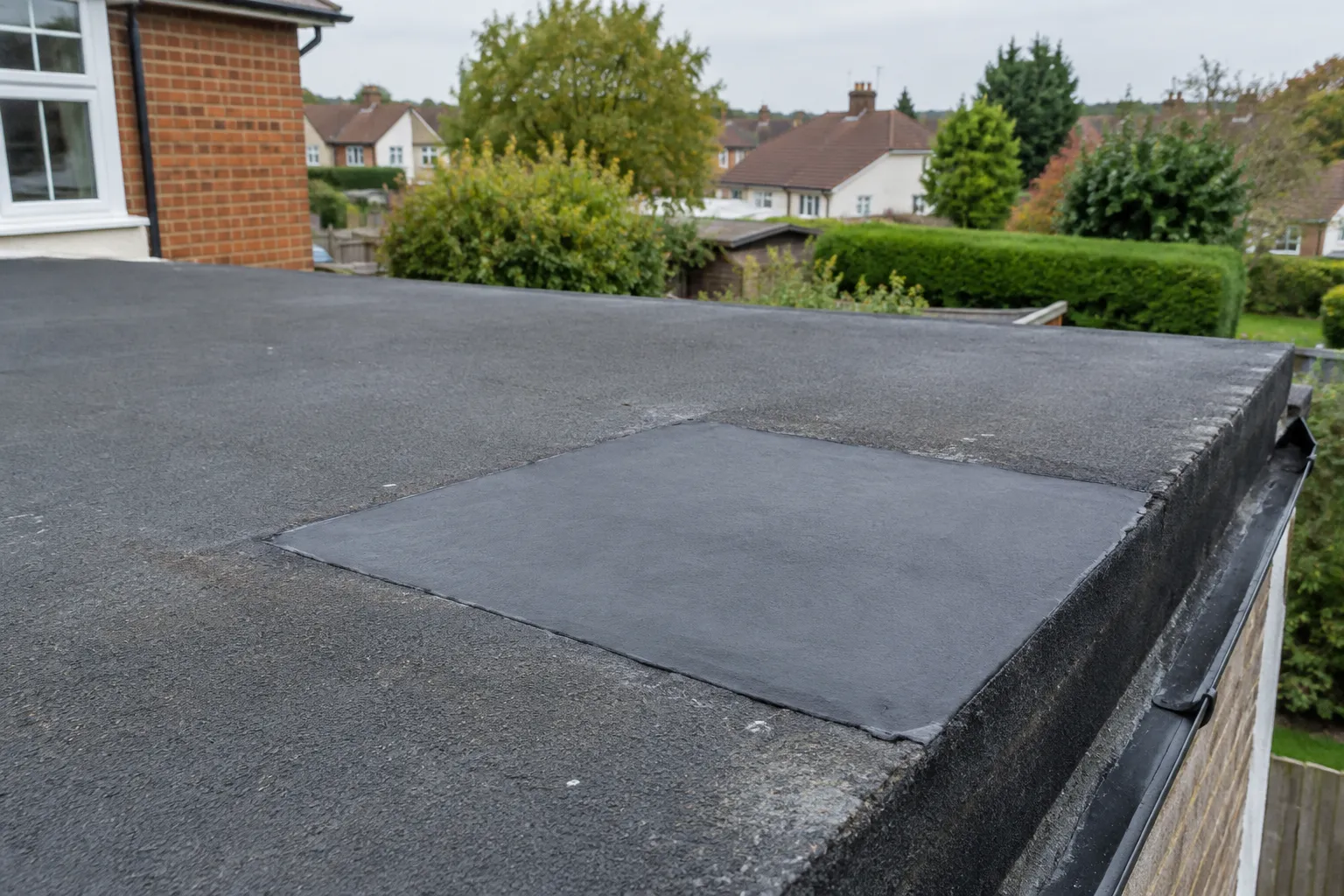
A roof that's failing at multiple points, pooling water across a wide area, or has reached the end of its expected life is better served by a partial or full recover than repeated patching. We'll check the fall, the outlets and the condition of the deck underneath before recommending either.
Is it cheaper to repair a flat roof than replace it?
Almost always, yes, for a single, localised problem. A straightforward patch repair on an accessible flat roof is typically a few hundred pounds; a full recover runs much higher since it strips back to the deck and relays the whole covering.
Repair stops being the cheaper option once you're paying for the same type of repair every year or two, because at that point the covering itself is failing rather than one spot on it, and a recover becomes the better value even though the upfront cost is higher.
What's the best way to seal a flat roof?
The best method depends on the material already on the roof. EPDM is patched with EPDM and the correct bonding adhesive, felt with felt (usually heat-bonded or self-adhesive), and GRP fibreglass with a resin and matting repair, not a surface paint.
Mixing materials, like painting a liquid coating over a failing felt roof without addressing what's underneath, buys a little time at best. Replacing like with like, or moving to a better-suited material if the current one keeps failing, gives a more lasting repair than layering a quick product over the problem.
Questions people ask
What do roofers use instead of felt?
EPDM rubber and GRP (fibreglass) are the two main alternatives to traditional bitumen felt on UK flat roofs. Both are typically longer-lasting than older felt systems and come with fewer seams, since EPDM is often laid as one sheet and GRP is applied as a liquid laminate that cures solid. Felt is still used, especially for smaller or lower-budget jobs, and modern high-performance felt systems last considerably longer than older ones.
What is an EPDM roof covering?
EPDM stands for ethylene propylene diene monomer, a synthetic rubber membrane laid across a flat roof in one piece or large sheets and bonded down with adhesive or mechanical fixings. It's flexible, which lets it cope with a building moving slightly without cracking, and it's one of the most widely used flat roof coverings in the UK.
What's the cheapest flat roofing material?
Felt is usually the cheapest material to supply and fit, followed by EPDM, with GRP fibreglass typically the most expensive of the three. Cheapest to install isn't always cheapest overall though: a material that needs replacing sooner costs more across its lifetime than a slightly pricier one that lasts longer, so it's worth asking about expected lifespan alongside the upfront price.
Does a flat roof recover need building regulations approval?
Yes. Replacing a roof covering, flat or pitched, falls under building regulations in England, which exist to check the work is structurally sound, insulated properly and ventilated correctly. A roofer registered with a competent person scheme can self-certify the work, which avoids you having to apply separately. Ask whoever quotes you whether they'll handle this as part of the job.
How often does a flat roof need replacing?
It depends on the material and how well it was installed, more than on a fixed number of years. A well-installed EPDM or GRP roof commonly performs well for several decades; older felt systems typically need attention sooner, especially where sunlight and pooling water have aged the surface. Regular maintenance, like keeping outlets clear, extends any flat roof's working life, which is worth more than the material choice on its own.
Guides in this section
- Flat roofing
A flat roof that's leaking now. What emergency flat roof repair in Epsom involves, what it costs, and how to book us today.
Where these facts come from
- Published UK flat roofing material and price guides, checked October 2026
- Building regulations approval, GOV.UK
Last updated